Legal Software for the life of a case
nextpoint
Nextpoint is a legal-tech platform used by law firms and corporations to manage e-discovery and litigation—from massive data imports to case-building workflows. As the sole Senior Product Designer, I am an individual contributor on our most complex initiatives and I manage three other designers.
I am leading major UX modernization efforts across both core products (“Discovery” and “Litigation”). I am delivering a unified design system using Figma, Storybook, and React. I shape product strategy using the Shape Up process, which I introduced and implemented on the Product team.
My work focuses on reducing complexity in high-stakes legal workflows, driving UI consistency, and partnering cross-functionally to build the right things the right way.
tuscanyds
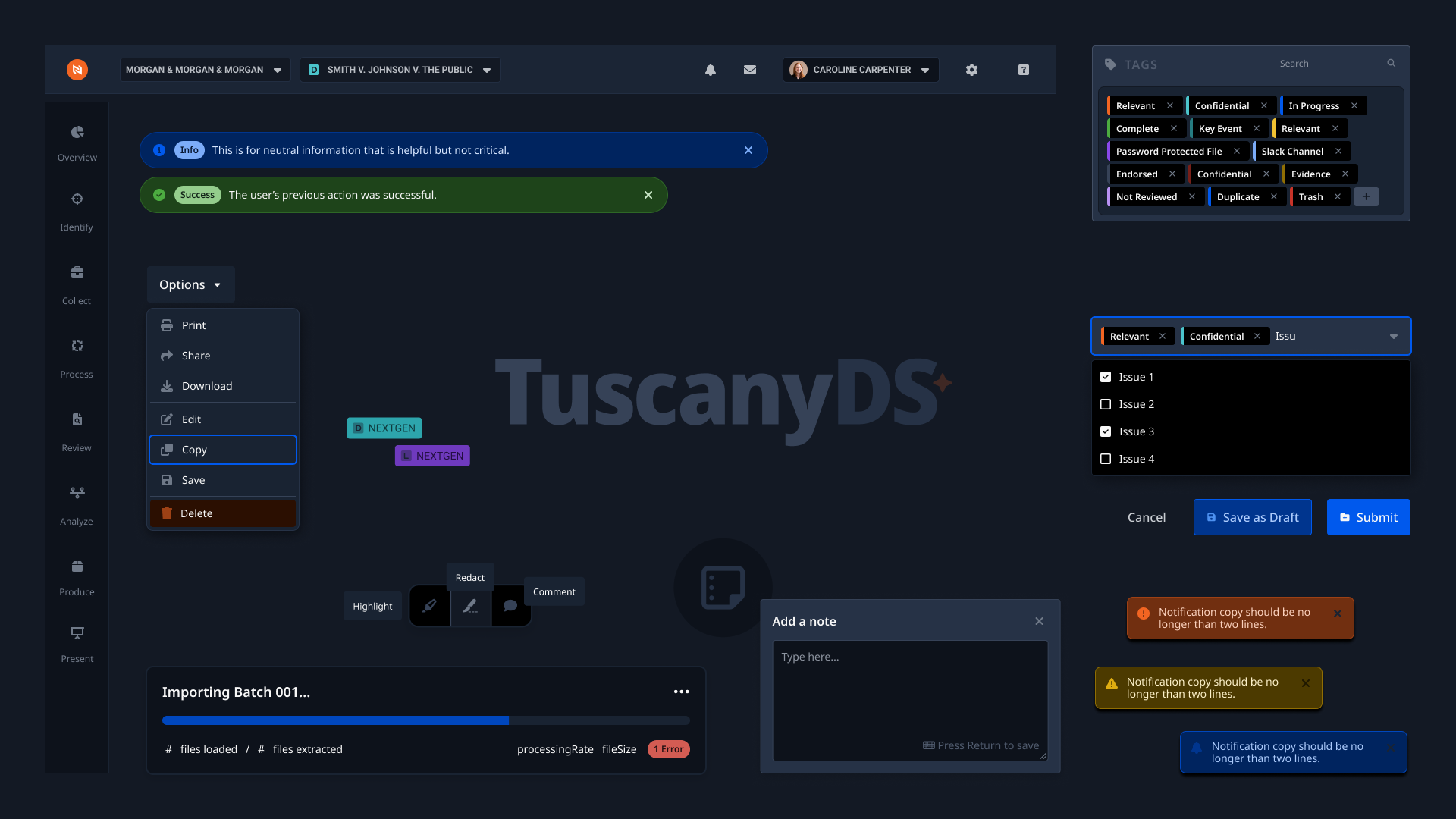
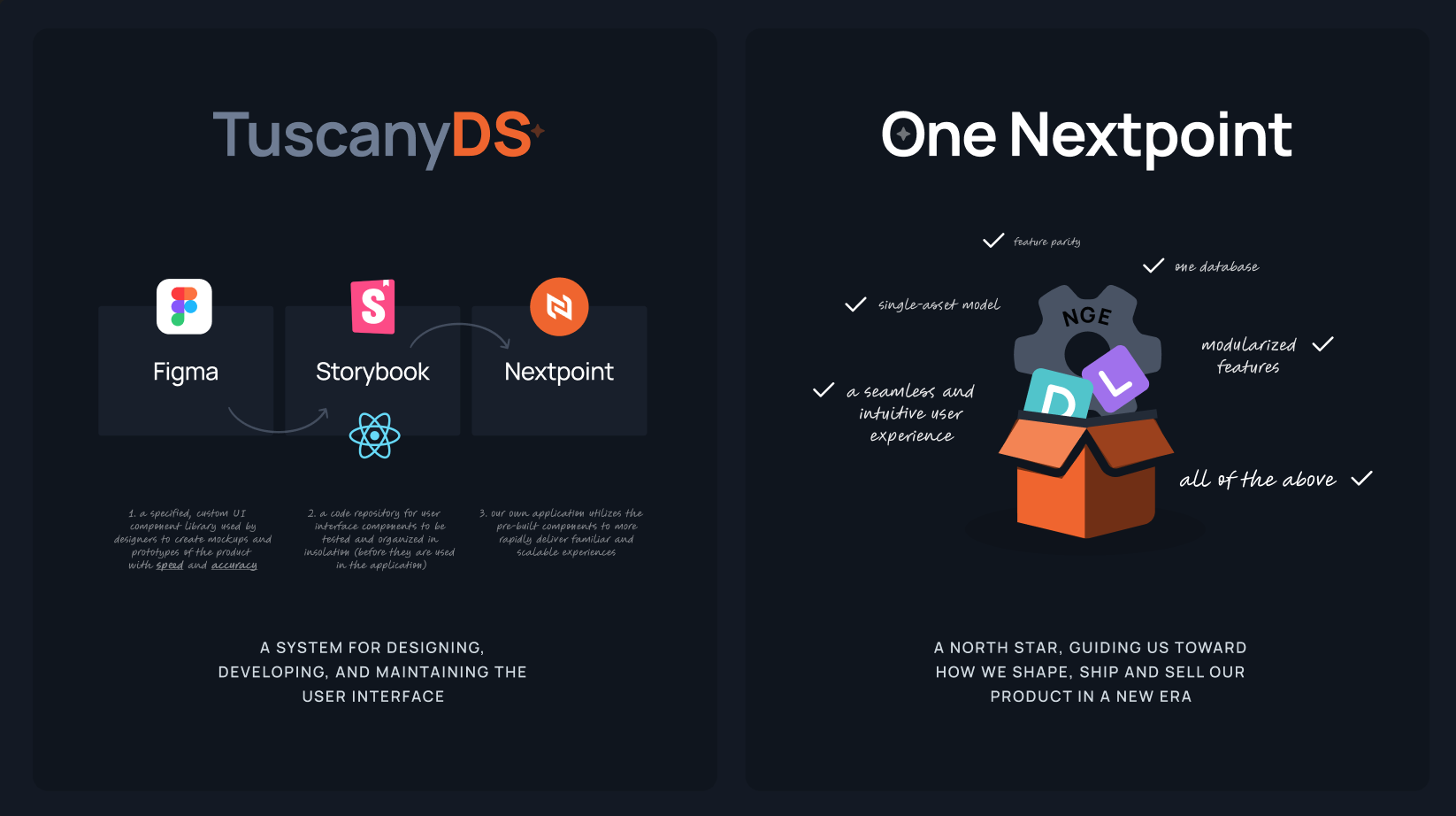
TuscanyDS is Nextpoint’s design system, providing a shared foundation of components, patterns, and tokens that enables consistent user experiences, faster delivery, and scalable product development.
Impact
Reduced design and engineering duplication by standardizing core components and patterns
Improved cross-product consistency as Discovery and Litigation converge under One Nextpoint
Established design-system governance and contribution models to support long-term platform evolution
One Nextpoint
Discovery and Litigation are two separate but strikingly similar products which support different phases of a legal matter—Discovery focuses on processing and reviewing large volumes of data, while Litigation focuses on organizing evidence and executing trial-ready workflows.
The reality
Discovery and Litigation rely on the same core workflows, data, and user behaviors. Treating them as separate products has created duplicated functionality, growing design and engineering debt, and increasing cognitive load for users.
The opportunity
Unify Discovery and Litigation into a single platform with shared infrastructure and modular capabilities delivered through subscription tiers. This reduces duplication, simplifies mental models, and allows teams to build once and scale across the entire product surface.
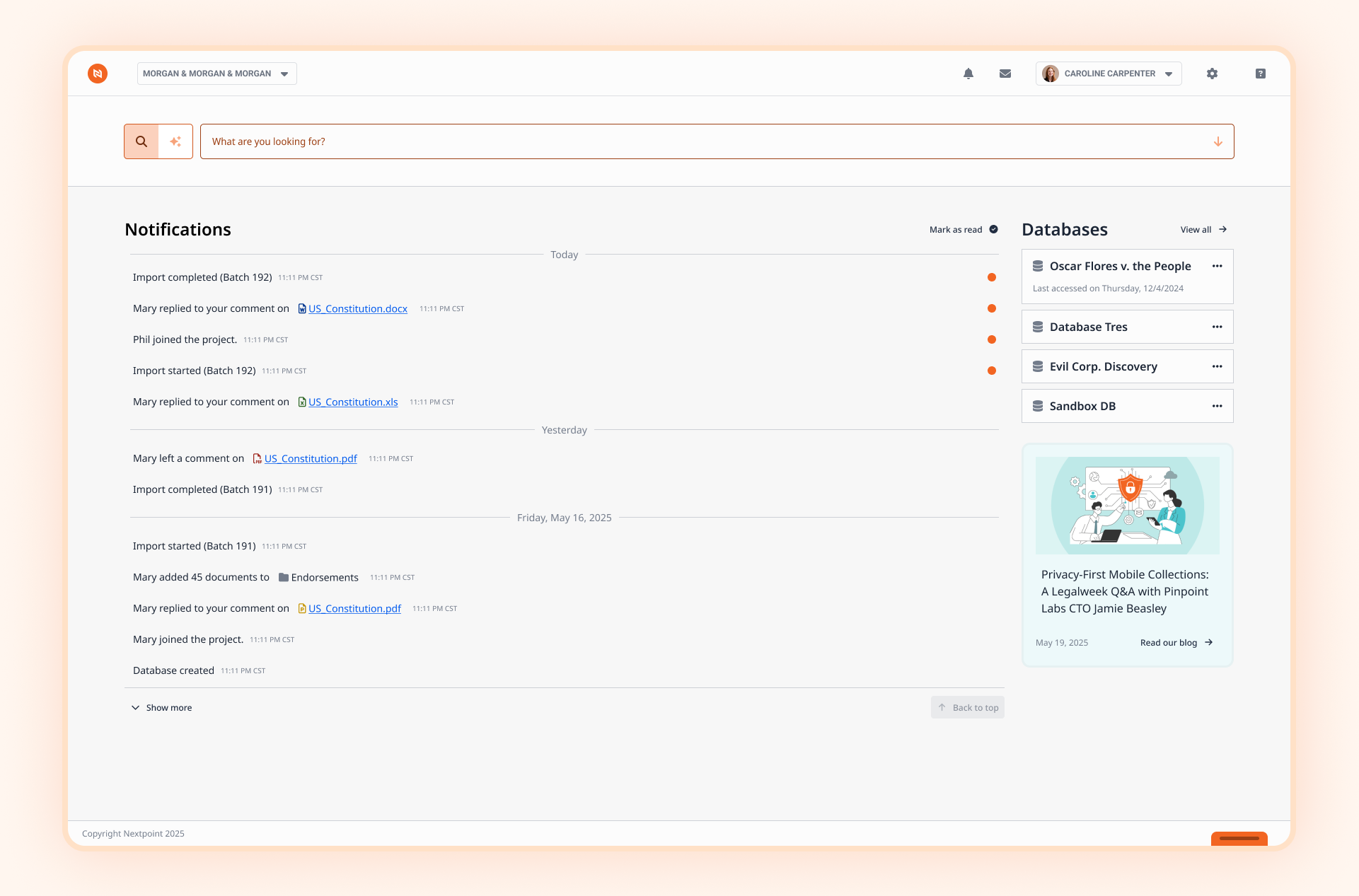
Home & Activity Feed
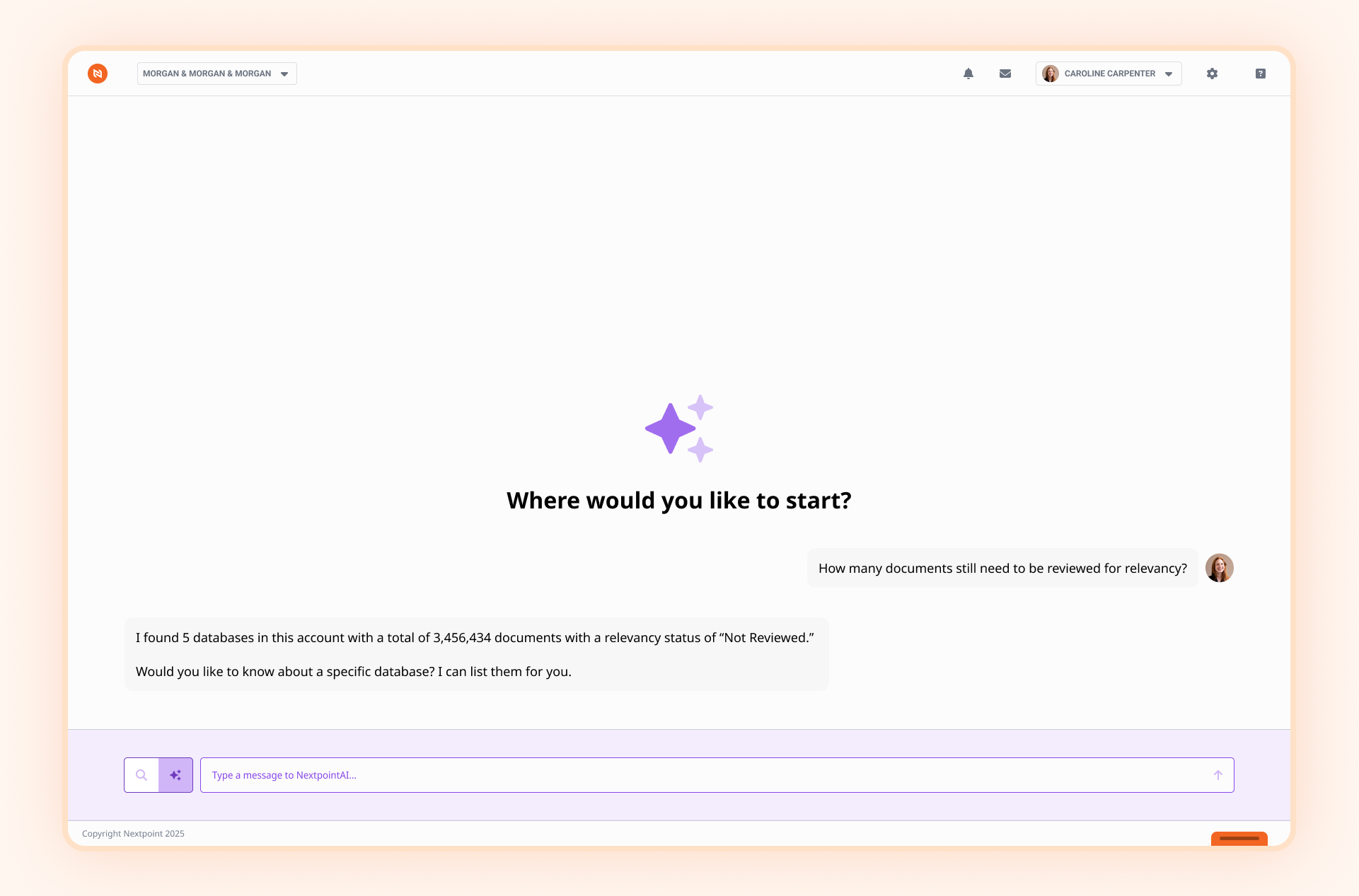
Generative AI Assistant
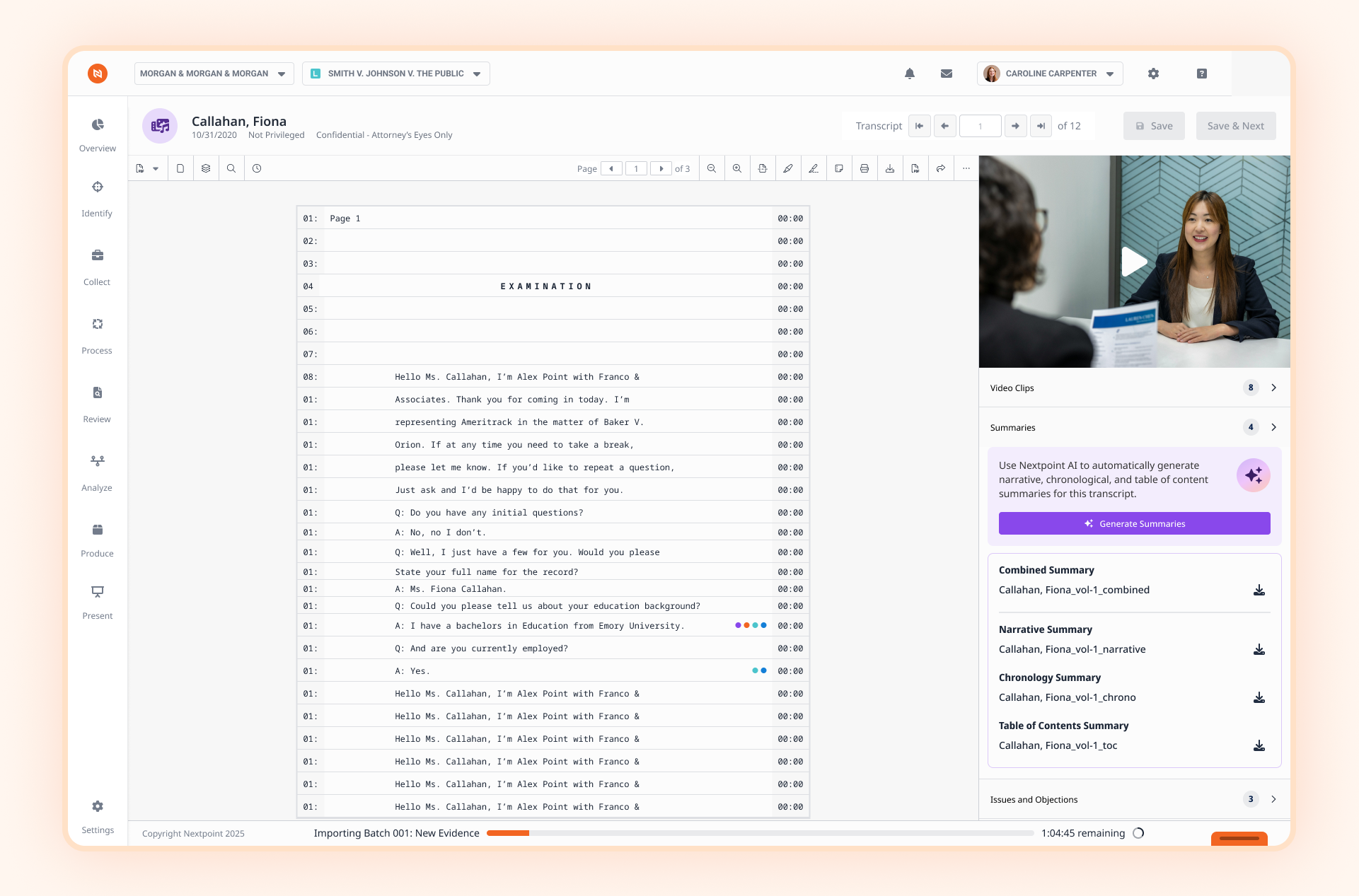
Deposition Transcript Viewer
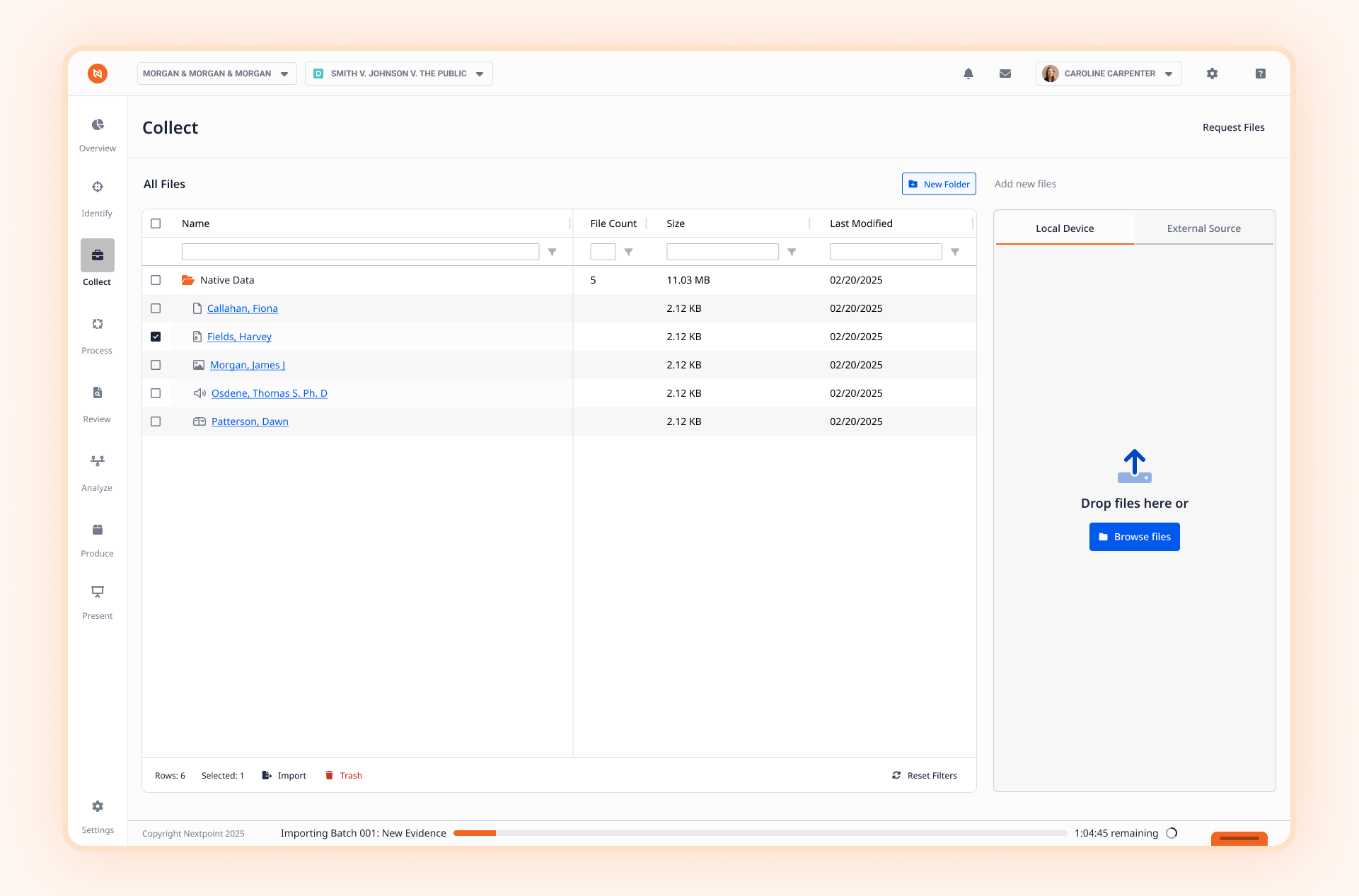
Data Collection and Processing
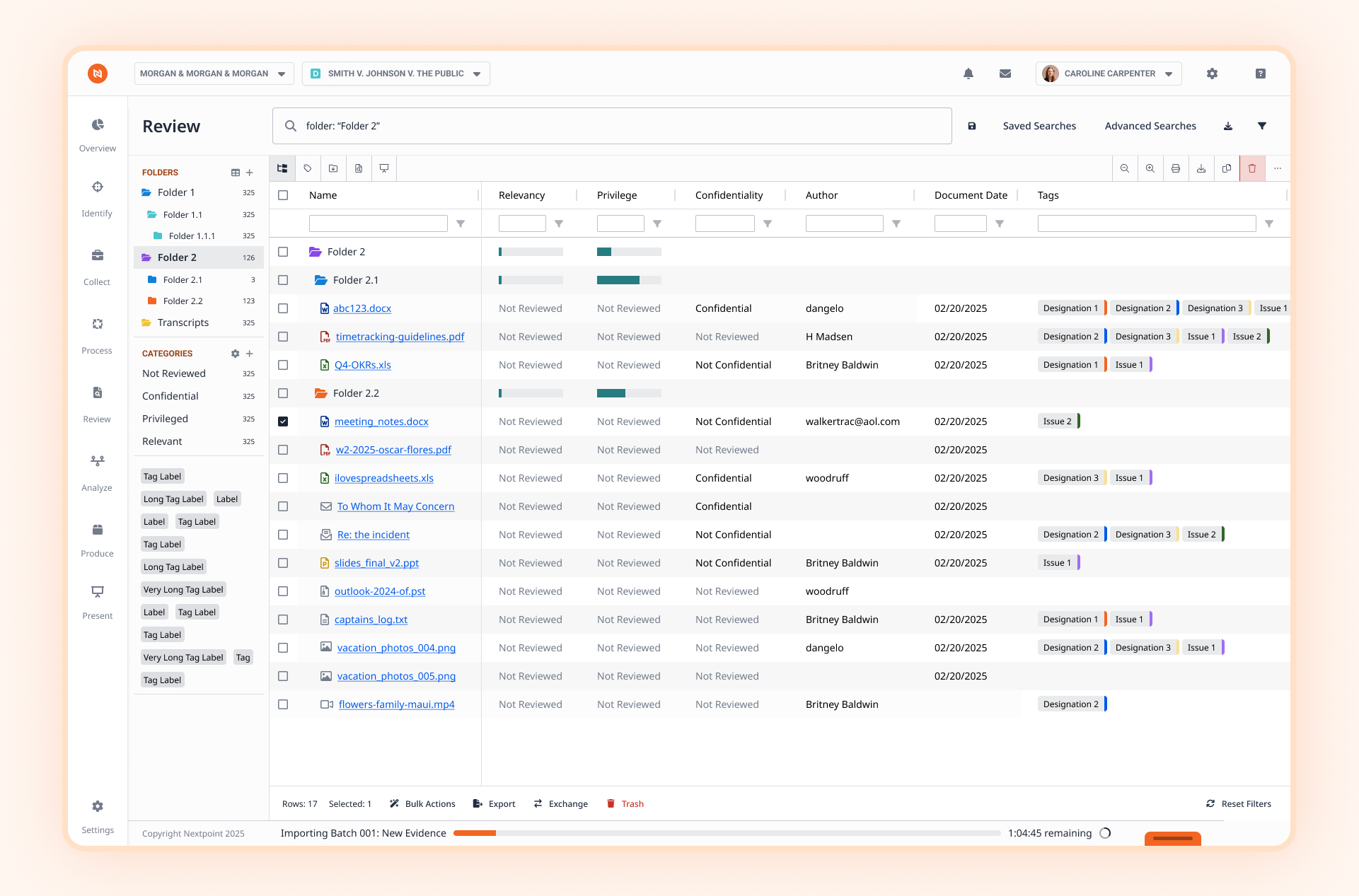
folder and sub-folder data model and interface
Nextpoint’s folder structure had become a hidden constraint—limiting how legal teams organized complex matters and blocking future platform work. I led a redesign of the folder and sub-folder model to align system behavior with real litigation workflows and support scale.
Enabled deep, flexible hierarchies capable of supporting large, multi-custodian matters
Reduced edge cases and brittle behavior caused by hard structural limits
Unlocked downstream platform features including bulk actions, permissioning, and cross-product consistency
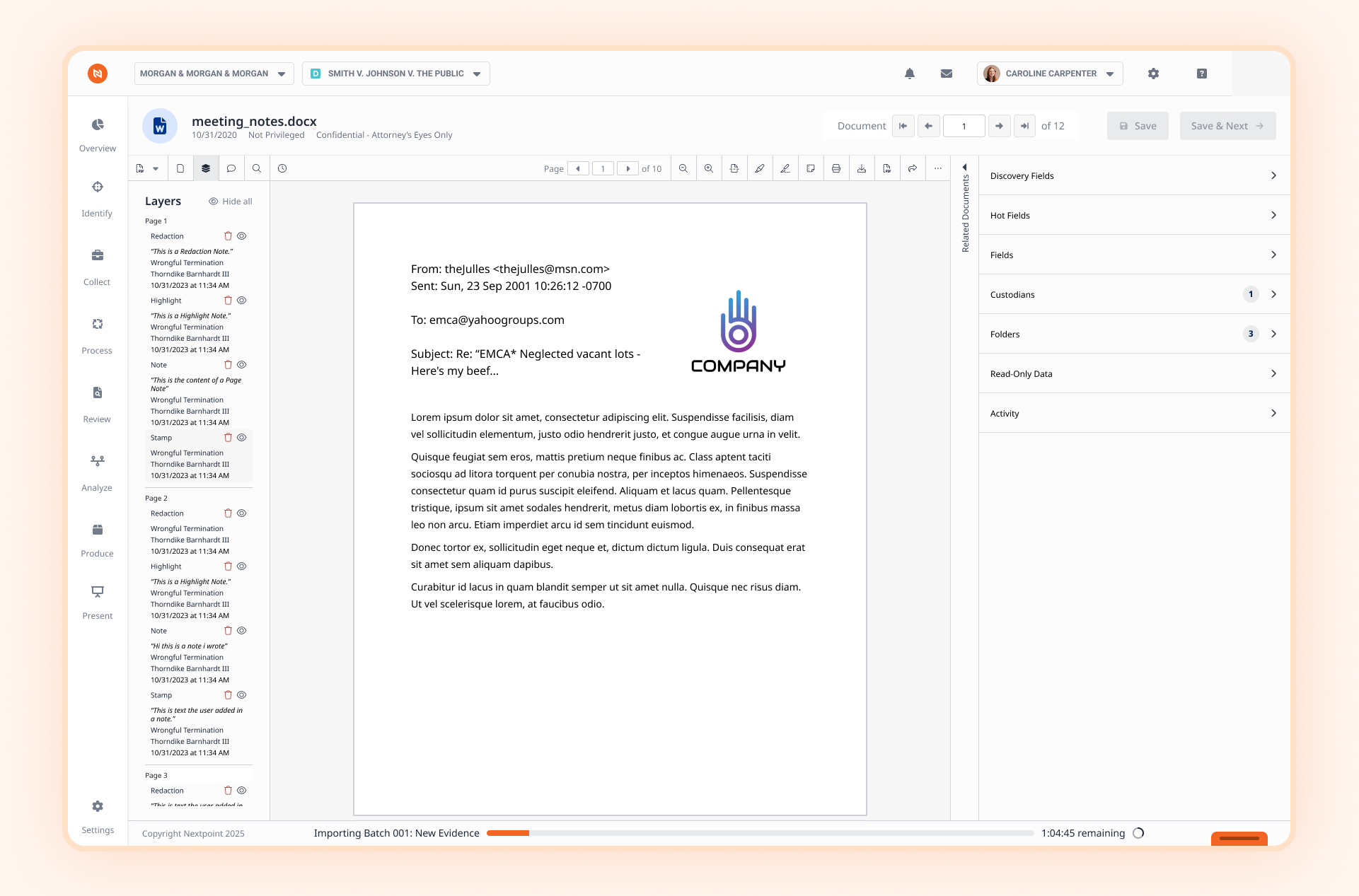
Document Viewer and Annotation Layer
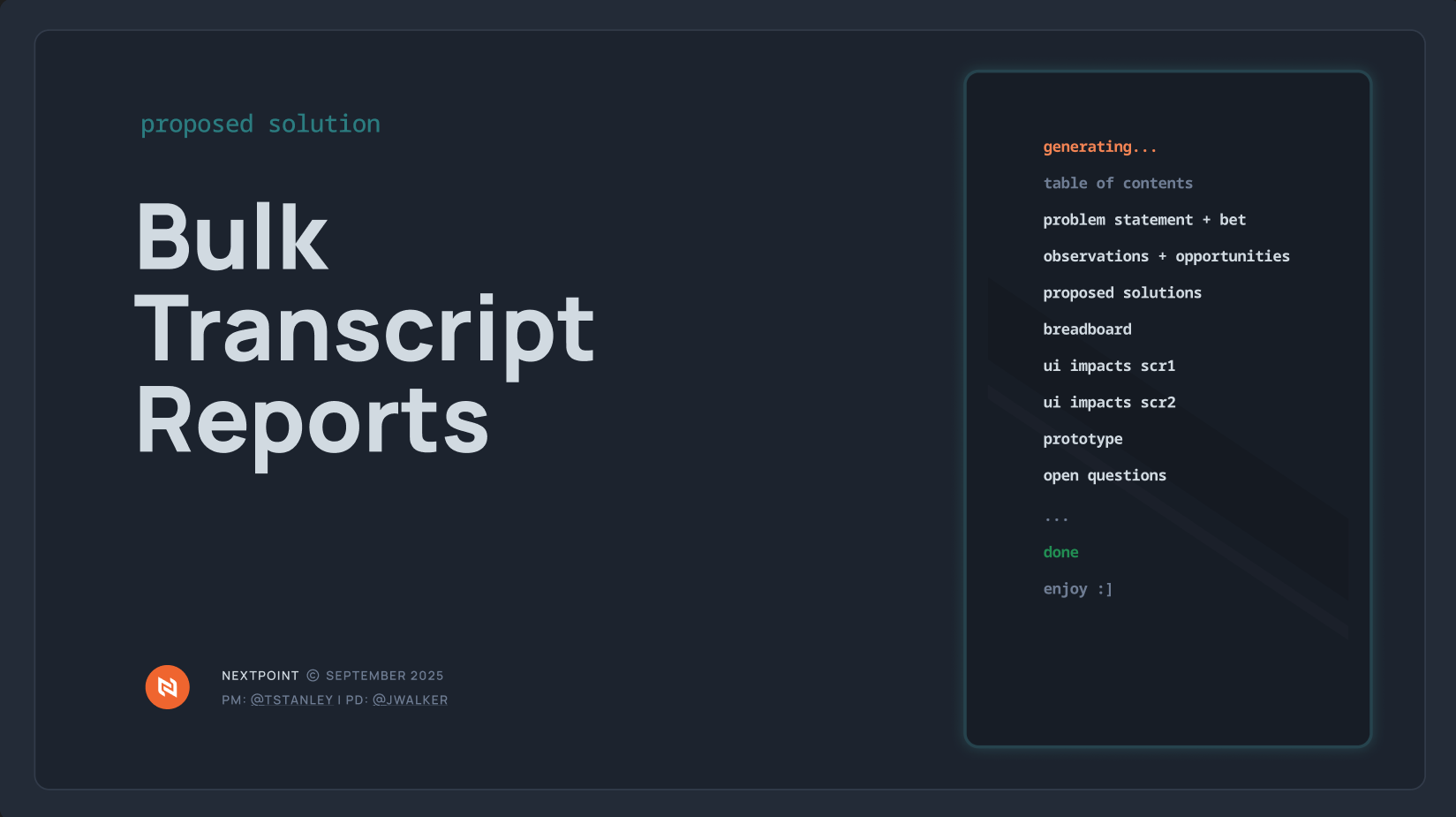
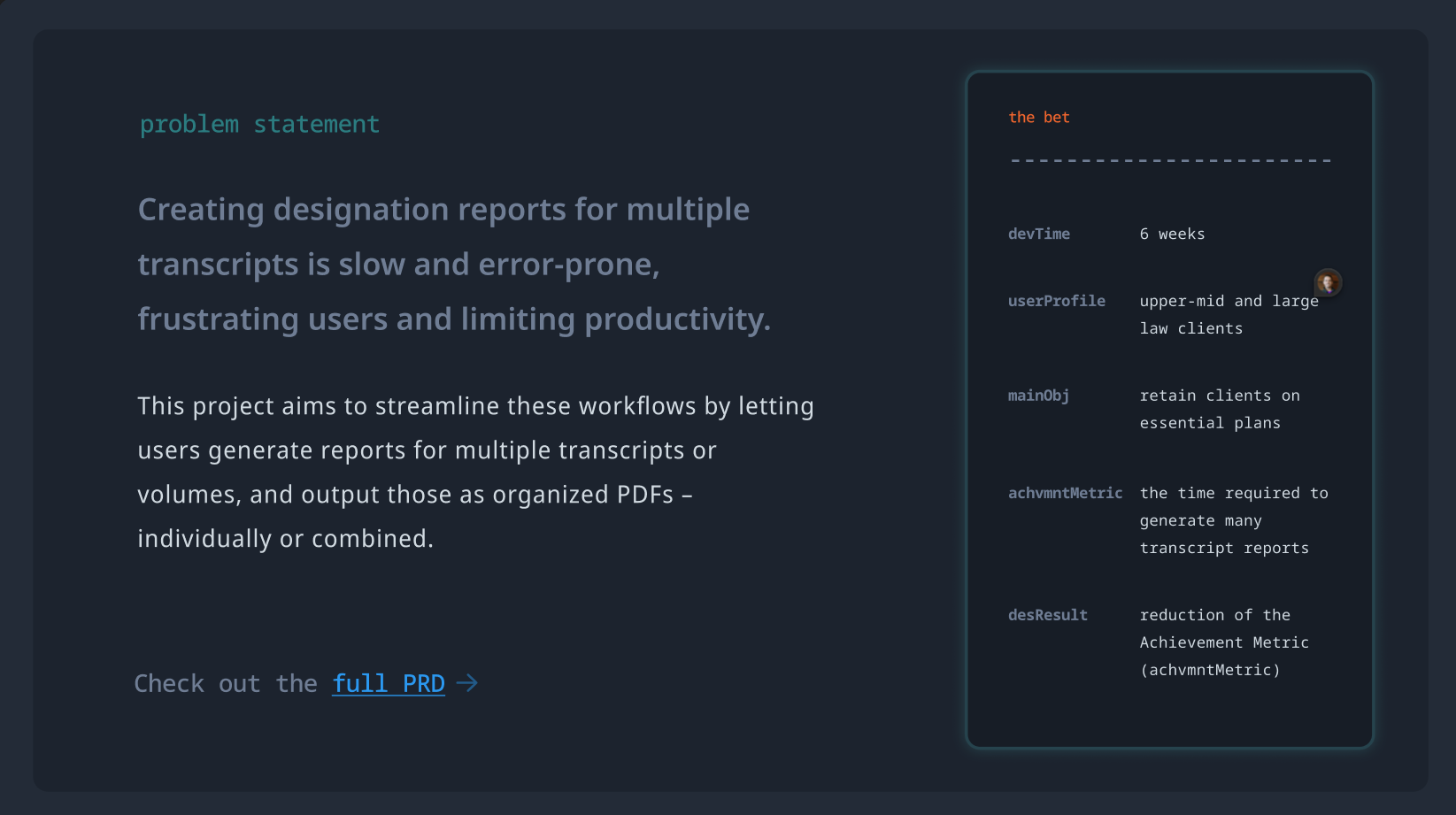
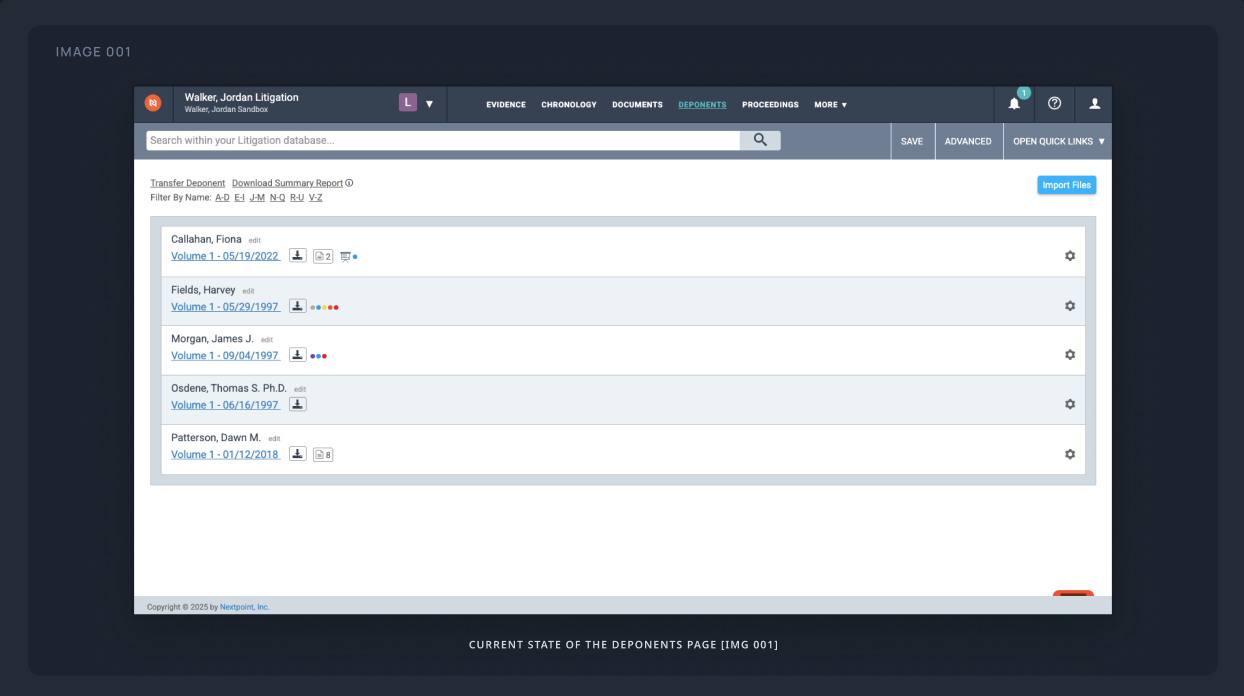
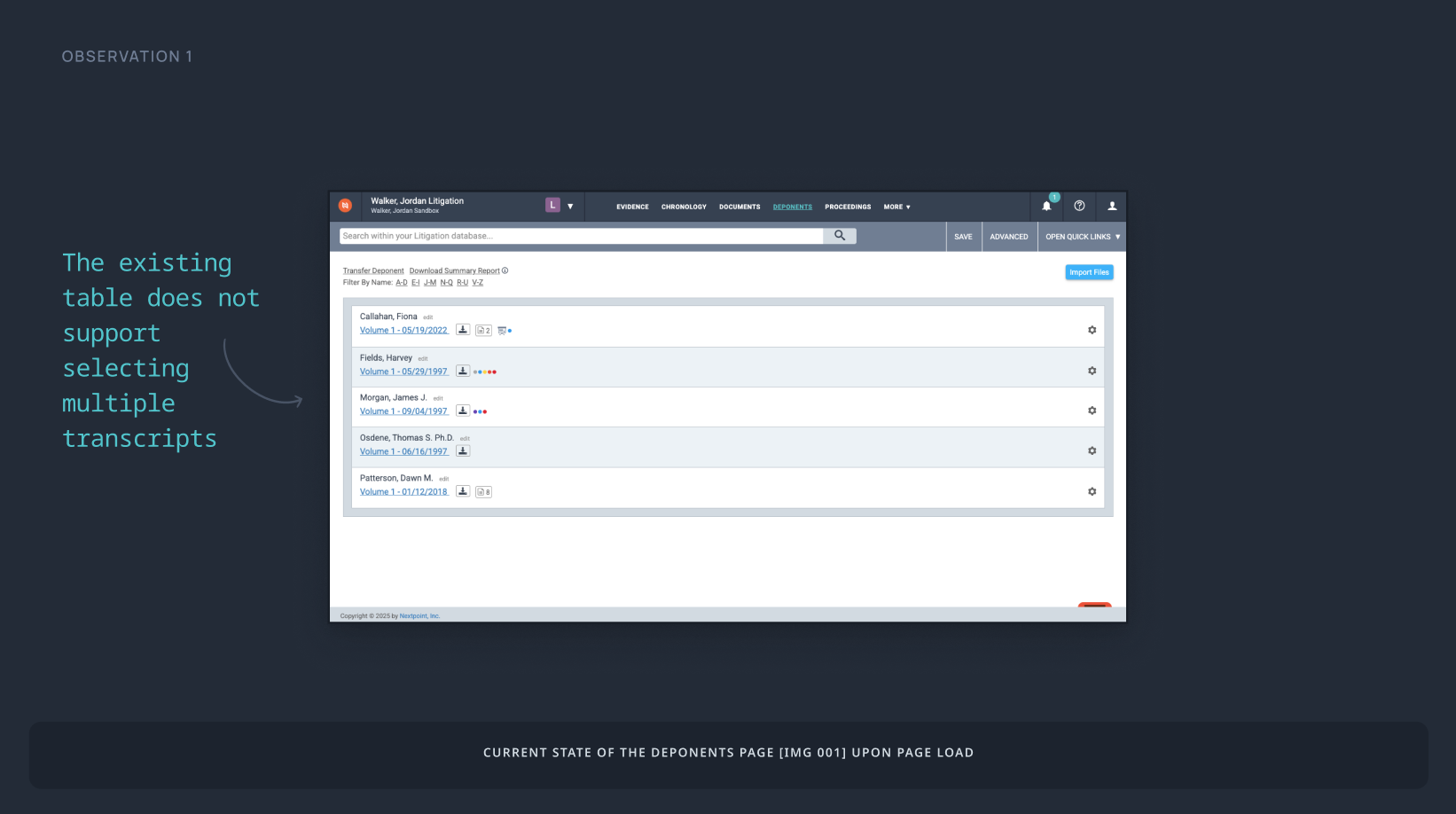
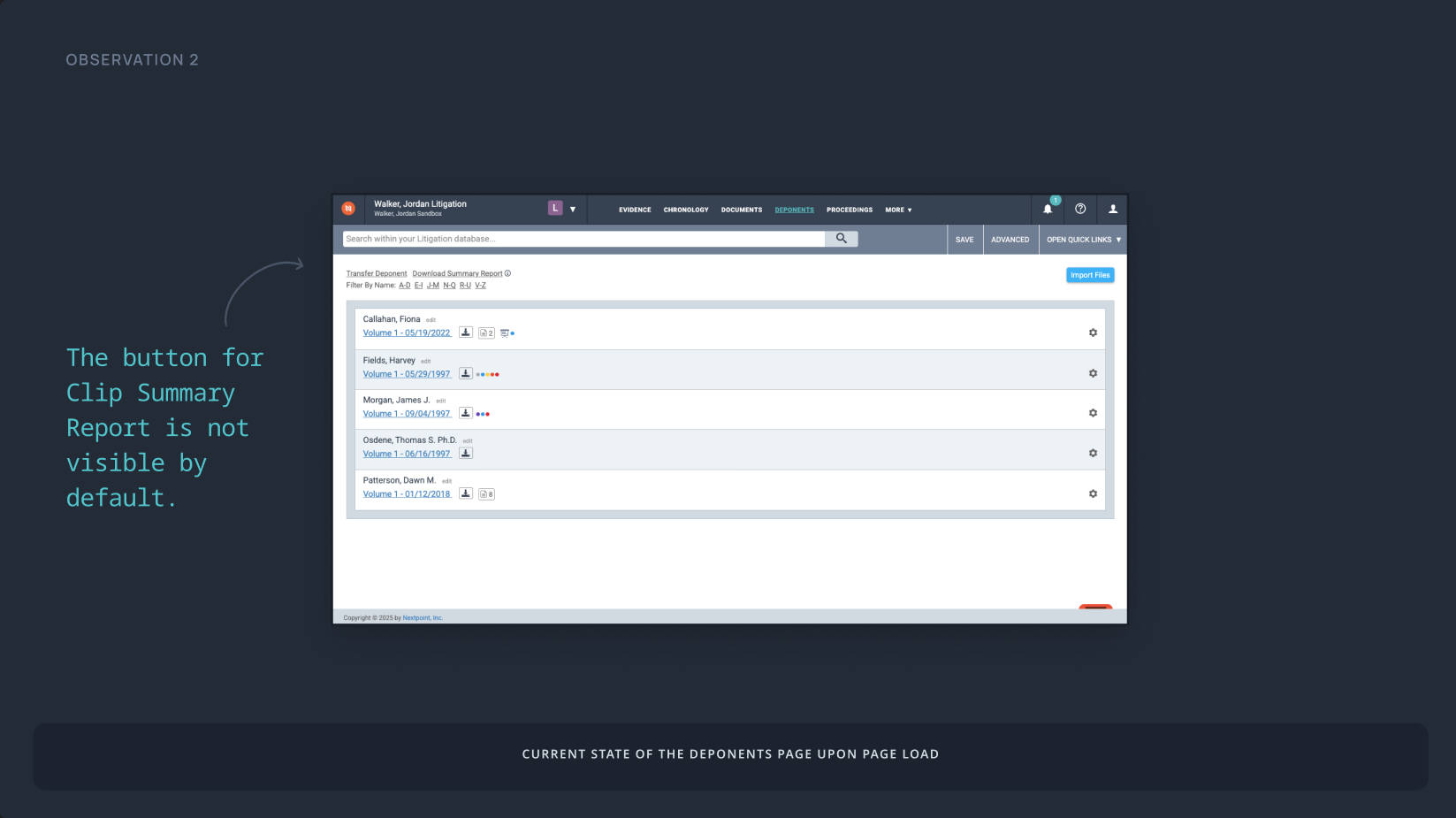
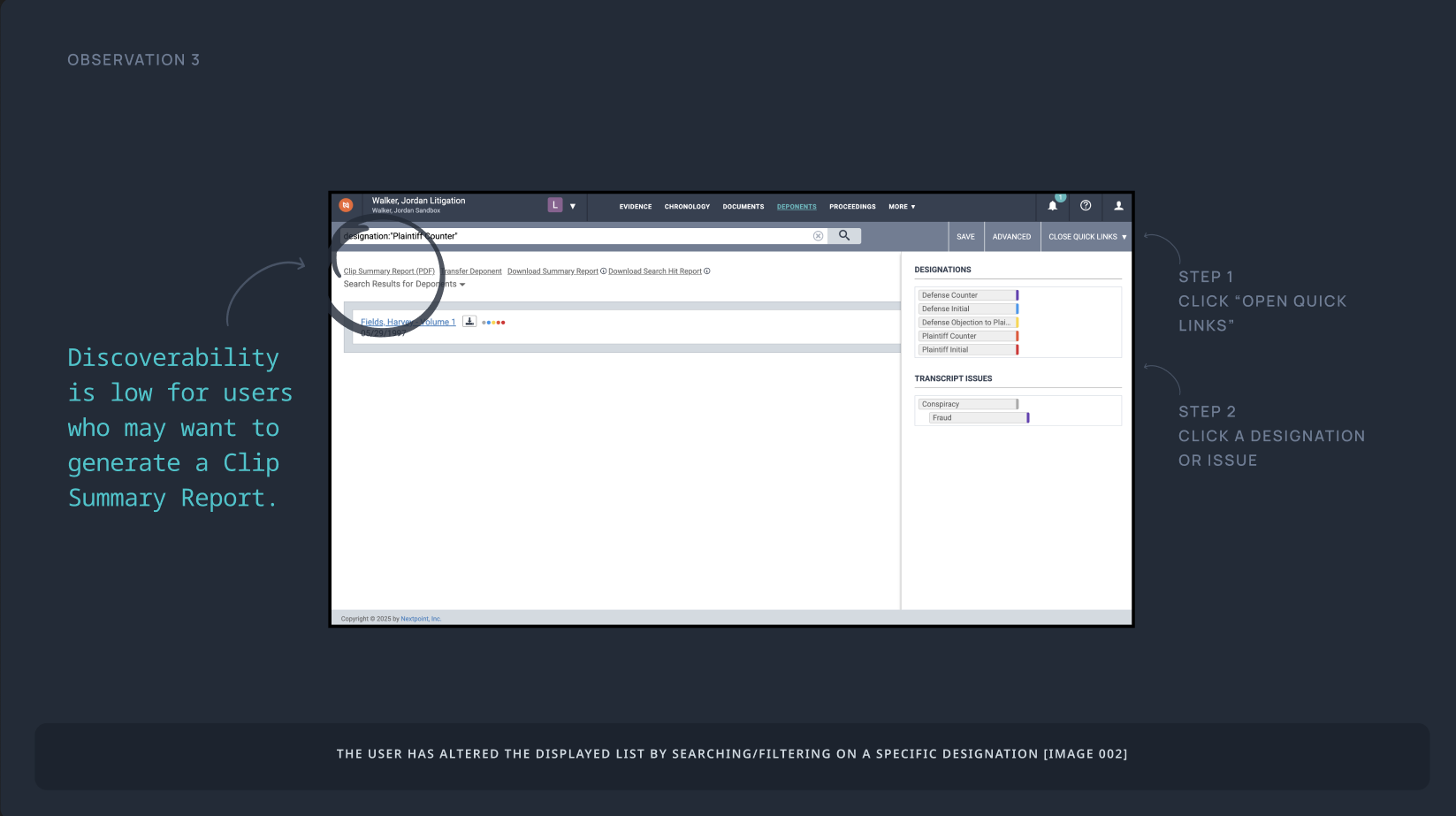
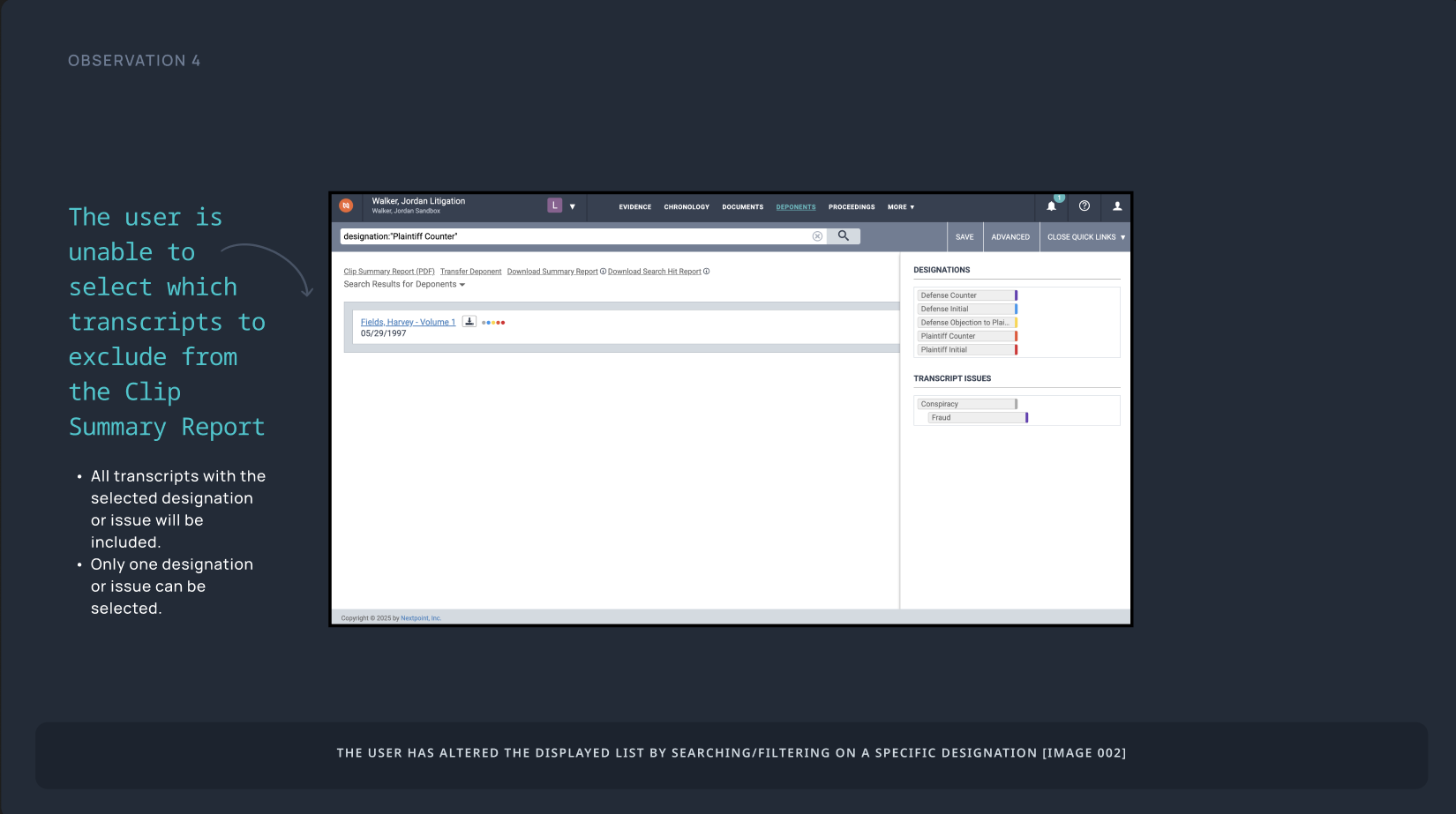
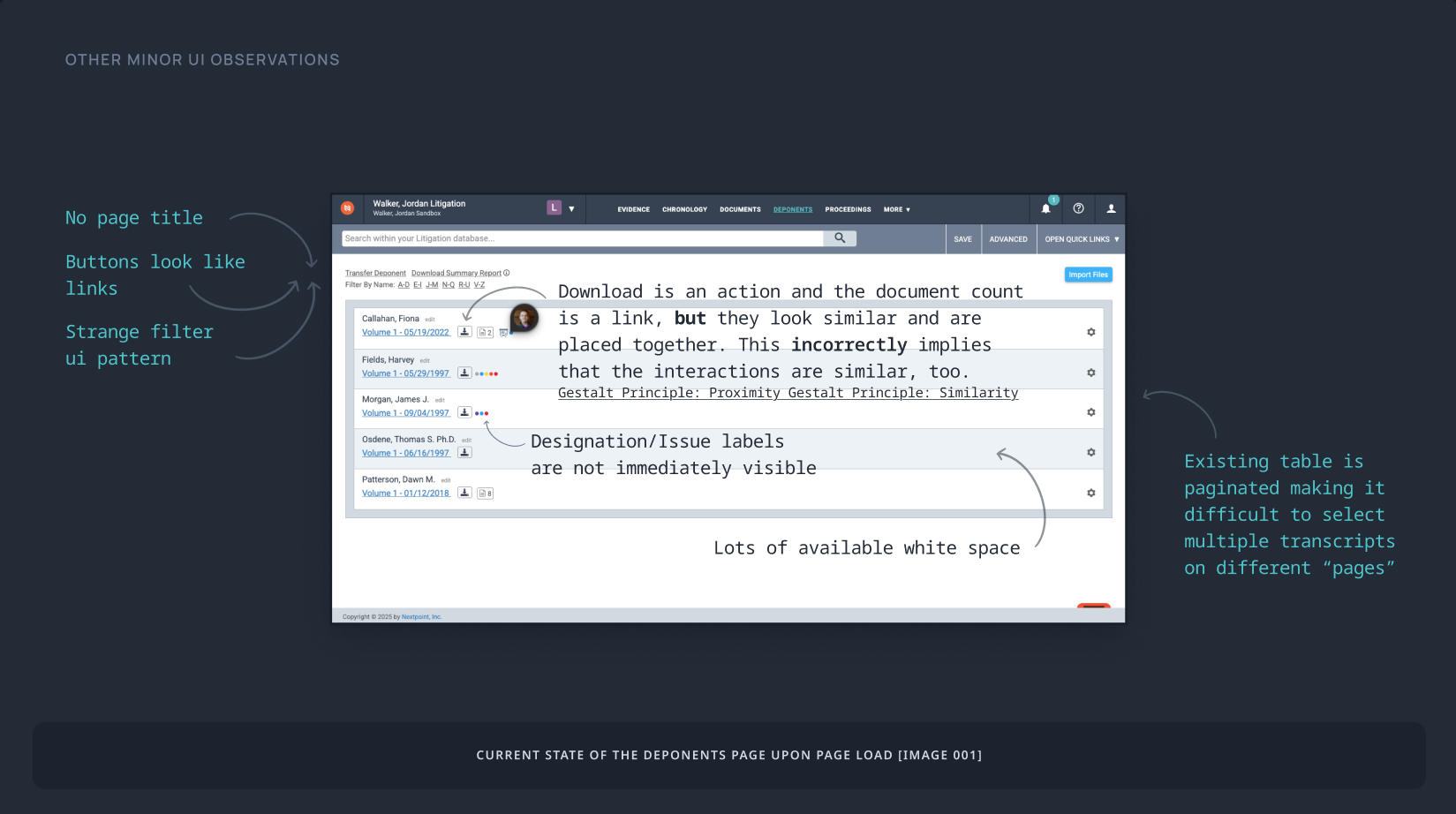
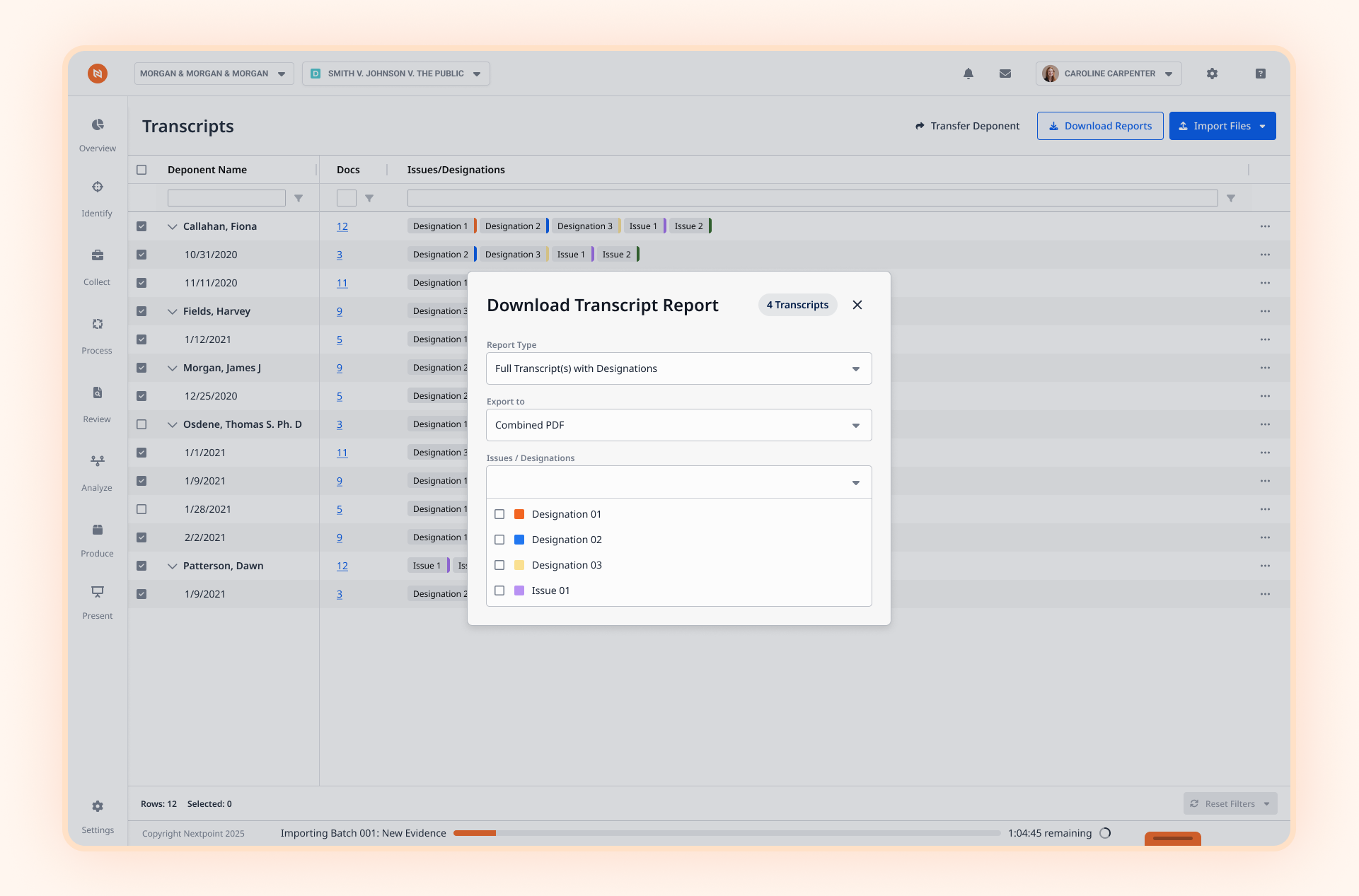
Legal teams needed a faster way to generate reports across large sets of transcripts without repetitive, manual work. I designed a scalable bulk-reporting workflow that allowed users to select multiple transcripts, configure output once, and generate consistent, court-ready reports in a single action.
The solution reduced friction for high-volume litigation workflows, aligned with existing data models, and established reusable patterns for future bulk actions across the platform.
“Reduced report generation from N actions to 1”
“Eliminated repetitive configuration across dozens of transcripts”
“Cut report prep time by ~70–80% for high-volume cases”
Bulk Transcript Reporting
Legal teams needed a faster way to generate reports across large sets of transcripts without repetitive, manual work. I designed a scalable bulk-reporting workflow that allowed users to select multiple transcripts, configure output once, and generate consistent, court-ready reports in a single action.
The solution reduced friction for high-volume litigation workflows, aligned with existing data models, and established reusable patterns for future bulk actions across the platform.
“Reduced report generation from N actions to 1”
“Eliminated repetitive configuration across dozens of transcripts”
“Cut report prep time by ~70–80% for high-volume cases”